By Kaelen lee
Note: the schedule due date is
January 12 2026, Monday.
Exclude the week ends & Holidays.
Math
This page has been deleted over 2 times due to palmers horrible wifi
Introductory:
Math, in a nutshell Math is a topic that focuses on numerals and concepts. Concepts that determine if the learner understands the basic foundations of math. Math is used to teach people about numerals, techniques, diffrent perspectives, and concepts.

Article 1#
What People Will Learn From Math:
Math is an topic that helps others learn about numerals, techniques, and concepts. In this page you will learn about these concepts and the foundations of it. Examples of it will be given.
Description:
Arithmetic Operations:

Arithmetic, the main control of numeral manipulation. Arithmetic is the concepts of Addition, Subtraction, Multiplication, and Division. Students learn advanced versions of these in further grades. Arithmetic can be used for many situations being it is one of the core components which make up certain operations and foundations. It is a concept.
Algebra and Linear Algebra:
Geometry and Measurements:
Algebra is a branch of math that focuses on algebra structures, expressions, variables, and etc. It uses Arithmetic Operations to function and is important for advanced operations later on. It can help its learners represent unknown factors and numbers.
While Linear Algebra is a type of algebra that focuses on linear transformations, graphing, and Vector spaces.
(I am not good with algebra, please pardon me if I make any mistakes)

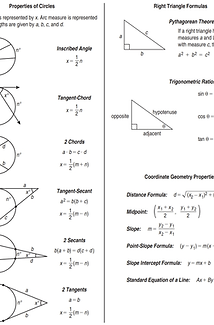
Geometry is the main focus on shapes and sizes, it helps us understand the concepts of shapes and spaces. Its importance is undeniable as it is used in everyday life to determine the properties, patterns, and relations that geometry shares with other subjects.
Measurements, it is paired with multiple math equations. A solid solution with dealing or measuring the exact numbers of said questions. It is mostly paired with geometry though, being its unique shapes and sizes makes a perfect match with measurement.
This topic teaches us the importances of length, area, perimeter, volume, angle measurement, and the transformations of said 2d and 3d shapes.


Article 2#
Where Are They Doing It?:
Place Of Work:
Equipment & Supplies:
In math, the students normally participate in math classrooms of course. But in some special occasions if the teachers don't have a permanent classroom. They may use other classrooms such as history, science, and maybe a resource room if the school district runs out of classrooms for the teachers. Most of the math classrooms are upstairs on the 2nd floor, but there can also be shared classrooms.
Article 3#


The equipment that the classroom with holds is not much compared to other classrooms. Being that math classrooms do not focus on physical or dangerous activities like dealing with chemicals. So in this case the classroom does not have glass buckets, sand buckets, fire blankets, or any type of safety equipment. But they do have an fire alarm and emergency exit.
In the math classrooms, the students would usually be copying notes from the teachers white boards, of course the students also need materials such as calculators, rulers, and Math text books that the teachers give on special occasions.
Safety Equipment:
Materials:
What Are They Doing?:
These books are the essential needs in math, it lets the readers understand the concepts and question they are trying to solve. By giving examples inside the books, it carries answer keys so if the student wants to know the questions answer they can check. Additionally the books are normally used for homework, you could solve the problems for fun on your free time.
Math Books:
Quizzes:
Description:
This page is used to describe what the students are doing in the classes, things such as projects, homework and such
For math, it could be a wide varierty depending on the topic of course.
Quizzes, in math quizzes are quite different from tests, being that math quizzes focus on short easy answers. While the tests require more equations, allowing the Student to essentially somewhat not give the full formula but still get credit.
Tests:
Math tests are similar to quizzes, they share similar characteristics but are still very different. Tests focus on long answers by giving the students hard questions that require more effort to solve. Things such as short answers, multiple choice questions, and fill in the blanks questions are not used as much in tests rather in quizes it is frequently used, although uncommon it is certainly

Homework:
Homework in math is very different from the other subjects in school. Math's homework mostly revolves in the Math books that the teacher gives the student. But sometimes it could be a practice sheet to prepare for a future quiz or test.
Clubs:
Clubs are small little groups that reside in their own areas, meant to improve a students own benefits or just meant for fun (you can encounter them after school). For math though, it focuses on solving math questions, think of it as PLT (personal learning time) but after when the school ends. You can practice with friends.
Article 4#
Article 5#
Conclusion:
Although math may seem very difficult towards many people, it is safe to say its difficulty and challenges make it extremely important to learn about. Being math speaks of itself as concepts, techniques, and solutions. Math's history is important as well, being that it is used for many things in the past, being in multiple inventions, concepts and also managed to make different branches of itself. Math does not make you find solutions, you find them for your own benefits.
In conclusion, math is a large, challenging, and a harsh concept. Meant to be used to challenge ones self in both memory, skill, and multiplication. It is used in everyday life. for solving questions, problems, and finding solutions. It is overall a skill everyone should have.